Wireless networks have moved from convenient additions to critical business infrastructure in a remarkably short period. The assumption that a business can function adequately with patchy connectivity, inconsistent coverage, or a network that can't scale alongside the organisation has become untenable across virtually every sector. For businesses in Bangkok and across Thailand that have recognised this shift, the question isn't whether to invest in quality network infrastructure — it's which solution and which partner to trust with an investment that will shape daily operations for years.
The UniFi ecosystem from Ubiquiti has established itself as one of the most capable and most widely deployed enterprise network solutions available for businesses that want genuine performance without the pricing and complexity that traditional enterprise networking vendors have historically attached to this level of capability. Compass IT Solutions has built deep expertise in deploying, configuring, and managing UniFi infrastructure for businesses across Bangkok — bringing the technical knowledge that transforms quality hardware into a network that actually performs the way the business needs it to.
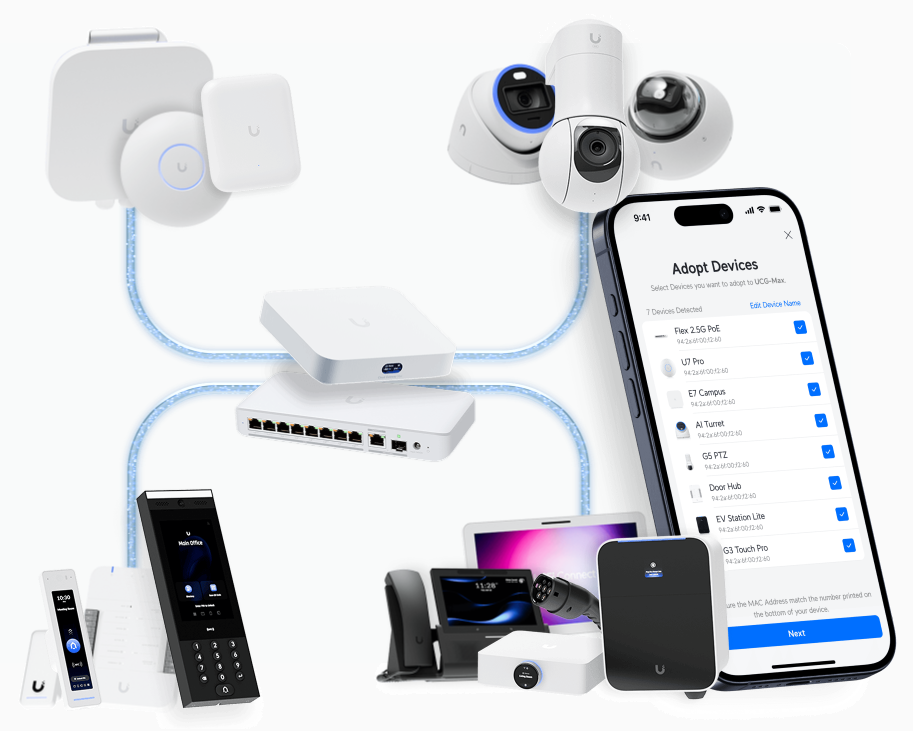
The UniFi controller is the management layer that makes the UniFi ecosystem genuinely powerful rather than simply capable hardware. It's the software platform through which the entire network infrastructure — access points, switches, security gateways, and other connected devices — is configured, monitored, and managed from a single interface.
What the controller provides in practical terms is visibility and control that decentralised management of individual devices simply cannot match. Network administrators can see every connected device, monitor traffic patterns, identify performance issues, configure guest networks with specific access restrictions, manage firmware updates across the entire estate, and respond to security events — all from one place rather than connecting to individual devices one at a time.
For businesses with multiple sites or complex network topologies, the controller's ability to manage distributed infrastructure from a single interface is particularly valuable. A Bangkok business with multiple office locations can maintain consistent network policies, monitor performance across all sites, and address issues without requiring on-site presence at each location — significantly reducing the operational overhead of managing enterprise-grade network infrastructure.
The controller can be deployed on-premises on dedicated hardware, on a cloud server, or accessed through Ubiquiti's hosted cloud platform — providing flexibility that suits different business preferences around data sovereignty, management access, and infrastructure investment.
Compass IT Solutions approaches UniFi controller deployment with the configuration discipline that unlocks the full value of the platform — proper network segmentation, security policy configuration, monitoring threshold setup, and the documentation that ensures the infrastructure can be managed effectively over its operational life rather than becoming a black box that only the original installer understands.
The UniFi access point range represents one of the most compelling value propositions in enterprise wireless networking — delivering performance, reliability, and management capability that has historically been associated with significantly higher price points.
The range spans from compact indoor access points suited to office environments to high-density models designed for environments with large numbers of concurrent connections, to outdoor-rated units for external coverage requirements. This range means the right hardware can be specified for the specific environment rather than deploying over-specified hardware everywhere or accepting under-specified performance in demanding locations.
Access point placement and configuration are where the difference between a UniFi installation that performs well and one that delivers mediocre results actually lives. Hardware quality creates the ceiling for performance — but placement decisions, channel configuration, transmit power settings, and the roaming configuration that determines how devices transition between access points as users move through a space determine whether the installation performs anywhere near that ceiling in practice.
Compass IT Solutions brings the site survey expertise and configuration knowledge that produces UniFi access point installations that genuinely perform — covering the space properly without creating the interference that poor placement decisions produce, and configuring the network parameters that allow devices to connect and roam cleanly throughout the covered area.
Q1. What does the UniFi controller do and why is it important?
It provides centralised management, monitoring, and configuration of the entire UniFi network infrastructure from a single interface — replacing the inefficiency of managing individual devices separately.
Q2. How many UniFi access points does a typical business environment require?
The number depends on the physical space, construction materials, and density of connected devices — a proper site survey determines the correct quantity and placement for reliable coverage.
Q3. Can UniFi access points handle high-density environments with many simultaneous connections?